Question:
What is Hudson Yards offering to shared public experiences? How has the rezoning affected the life experiences communities related to the neighborhood? And how can inclusivity be measured in Hudson Yards?
INTRODUCTION:
Hudson Yards is the most recent large scale redevelopment in New York City located directly south of the Lincoln Tunnel on the west side of Manhattan. The aim of the $25 billion plan is to introduce more high density commercial and residential buildings to the Far West Side. The intended result from the plan is to spur development in the area and to modernize the dated office stock of the Midtown Central Business District. Groundbreaking for the redevelopment plan began in 2012 and completed the first of its phases this year. However the intended materialization of Hudson Yards has led to the neighborhood being called a ‘gated community’, provoking questions on how inclusive it is to the public.
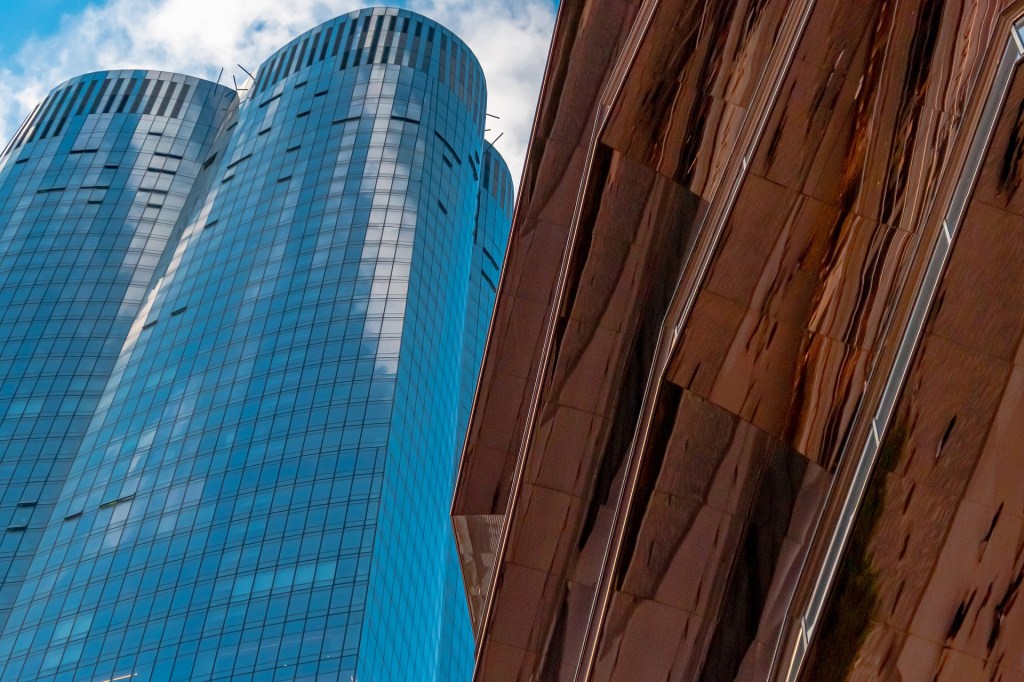
Plans to develop the Far West Side go back decades and attempts have been made to transform the neighborhood with the Jacob Javits Center in 1980s. Progress wasn’t made until 2001 when Senator Charles Schumer created a task force of business and civic leaders (Moss, 2011). His “Group of 35” released a report claiming without new locations to build high rise commercial office buildings, the future of New York City’s growth would be limited. After Deputy Mayor Dan Doctoroff’s appointment by Bloomberg in 2001, Doctoroff and Chair of the CPC Amanda Burden drove a plan to rezone the Far West Side before the Olympic Bid in 2005 for the 2012 Host City.
Built to LEED gold standards and offering larger office spaces than the average midtown building, the neighborhood has become host to companies like Amazon, BlackRock, and Equinox (Mollot, 2019). Hudson Yards claims that the redevelopment will bring 55,000 jobs (Rose et al, 2019). The State and the City’s agreed on cooperative plan to expand the Metropolitan Transportation Authority (MTA) to accommodate for the neighborhoods high socioeconomic expectancies. However increased geographic accessibility to the neighborhood from the new 7 train stop 34th St Hudson Yards hasn’t stopped critics from calling the redevelopment a gated community.
The inclusion of artworks in public and private space provides a performative relationship with the spatial environment. The added cultural context tied to the art enables participatory interaction for passersby and a shared public experience is created in the location.
Alongside the completion of the first phase of construction, the $200 million 150 foot tall Vessel opened to the public. Situated permanent public art installation commercial and residential additions to Hudson Yards, public art installations have been Much of Hudson Yards’ public outcry has increased after the completion of the Vessel. A 150 foot permanent public art installation and tourist attraction by architect Thomas Heatherwick.
Project Data Master Sheet:
| Name | File Type/Model | Source | Notes |
| 2019 NYC Zoning Features | Shapefile (.shp)/vector | https://www1.nyc.gov/site/planning/data-maps/open-data/dwn-gis-zoning.page | To present current zoning of New York City, specifically the Hudson Yards Special District. |
| 2002 NYC Pluto(Zoning Features) | Shapefile (.shp)/vector | https://www1.nyc.gov/site/planning/data-maps/open-data/bytes-archive.page?queries[search]=2002 | To present the zoning of the Hudson Yards area before the Olympic Bid rezoning in 2005. |
| Census Tract Map | Shapefile (.shp)vector | https://www.census.gov/geographies/mapping-files/time-series/geo/carto-boundary-file.html | To clearly identify Hudson Yards’ tract with boundaries and labels. Also for table data to join to in order to spatially represent data on excel. |
| Median Household Income (2017) | Comma-separatedValues (.csv) /Table | https://factfinder.census.gov/faces/tableservices/jsf/pages/productview.xhtml?pid=ACS_17_5YR_B19001&prodType=table | To illustrate the current economic characteristics of Hudson Yards and the surrounding census tracts. |
| Median Household Income (2010) | Comma-separated Values (.csv)/Table | https://factfinder.census.gov/faces/tableservices/jsf/pages/productview.xhtml?pid=ACS_17_5YR_B19001&prodType=table | To exhibit the ‘then’ economic characteristics of Hudson Yards before any construction was completed in the census tract. |
| Subway Routes (2017) | Shapefile (.shp)/vector | https://data.cityofnewyork.us/Transportation/Subway-Lines/3qz8-muuu | To show expansions made on the MTA subway, specifically newly added 7 train route to Hudson Yards |
| Subway Routes (2015) | Shapefile (.shp)/vector | https://www.baruch.cuny.edu/confluence/display/geoportal/NYC+Mass+Transit+Spatial+Layers+Archive | To exhibit the inadequate access to public transport in the Hudson Yards Census Tract. |
| Subway Stops (2019) | Shapefile (.shp)/vector | https://www.baruch.cuny.edu/confluence/pages/viewpage.action?pageId=28016896 | To make the recently constructed 34 St – 11 Av stop explicit as well as add more geographical context and familiarity to the map. |
| NYC Buildings | Shapefile (.shp)/vector | https://data.cityofnewyork.us/Housing-Development/Shapefiles-and-base-map/2k7f-6s2k | To clearly present the physical layout of the city as well as add noticeable landmarks. The distance between selected features in the layer are able to convey the amount of time to walk a specific distance. |
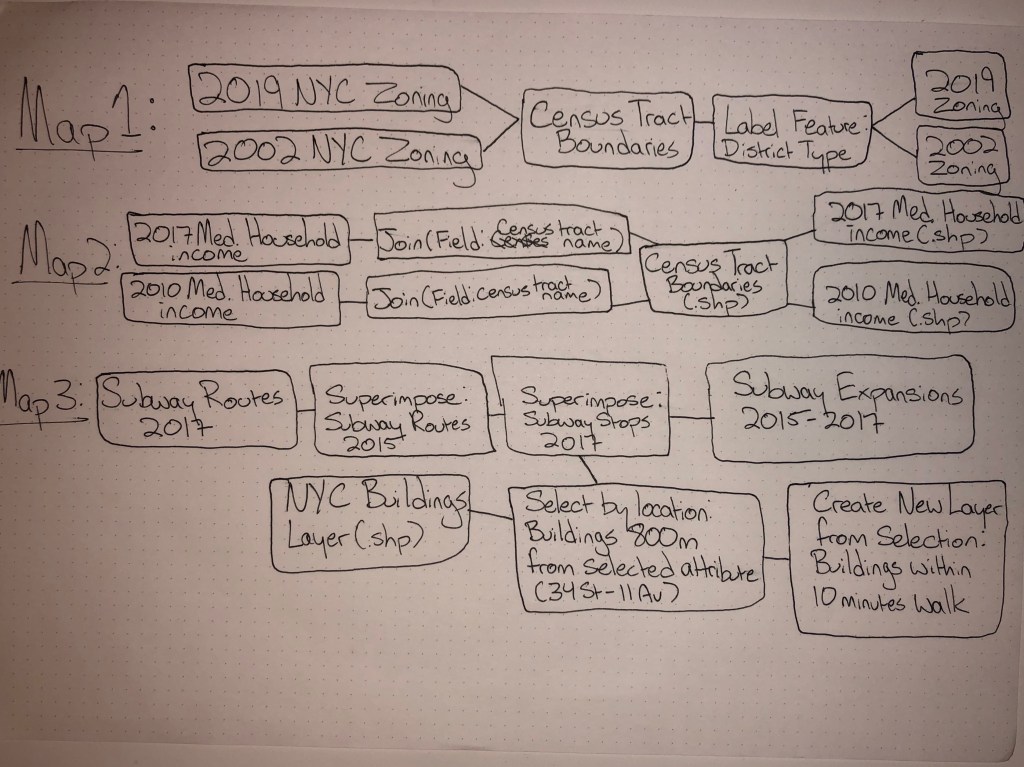
Workflow:
Results:
1. Hudson Yards Rezoning
The rezoning in Hudson Yards covers a 42 block area stretching to the new Farley Post Office (set top open up as a large addition to Penn Station). On the 2019 rezoning the Hudson Yards Special District can be seen in pink within the Hudson Yards Census Tract 99. The scale of the redevelopment is massive and explains the requirement for $25 billion. After the first phase of construction completed, Hudson Yards was able to offer 285 residences. In 2009 the Hudson Yards Special District was planned to offer 25% of newly constructed residences as mandatory inclusionary housing (MIH). When 15 Hudson Yards opened up in 2018 it offered 285 residential units with 107 affordable homes (Plitt, 2018). 35 Hudson Yards is the second address to open up with residential units, completed in 2019 the building offers 137 condominiums.

One of the noticeable features in the rezoning is Bella Abzug Park, the tan colored slither in the Hudson Yards Special District. The NYCGOV parks page says that the renaming of the 2007 built Bella Abzug park was in line with the de Blasio Administration’s plan to diversify the people and histories honored on public property . The Congresswoman the park is named after was a tireless activist for women’s rights; as a reflection of Abzug’s work in lawmaking, the city announced a plan to erect more statues of historic women (Gannon, 2019).

This bronze cast sculpture of a frog was created by Ailene Fields, founder of The Compleat Sculptor. The sculptures were installed into Bella Abzug Park October this year and are planned to remain in the park for the next 9 months. The artwork in Bella Abzug Park comes with the addition of the participatory interaction in the public space of Hudson yards. However, whilst exhibiting the dragons, owls, mermaids, masculine deities, and a frog may enchant children and tourists – the question about whether they help the representation of historic women is raised.
2. Median Household Income
From 2010 to 2017 the average median income of Census tract 99 (Hudson Yards) increased by roughly $4,000. The increase in blue hue in 1009900 (Hudson Yards) denotes a wealthier classification. The increase increase in median income can be explained by the newly constructed 15 Hudson Yards offering 285 residences with 2 bedrooms and 2.5 bathrooms on the One Hudson Yards site running up to $9.6k on the Hudson Yards rental site. For consistencies purpose the classifications for the two median income layers have been set to the same quantifications: 9 sequential classes in intervals of $25,000 (the last classification was set to $250,000 to accommodate for the largest median incomes in Manhattan that cannot reasonably be portrayed in $25,000 intervals).
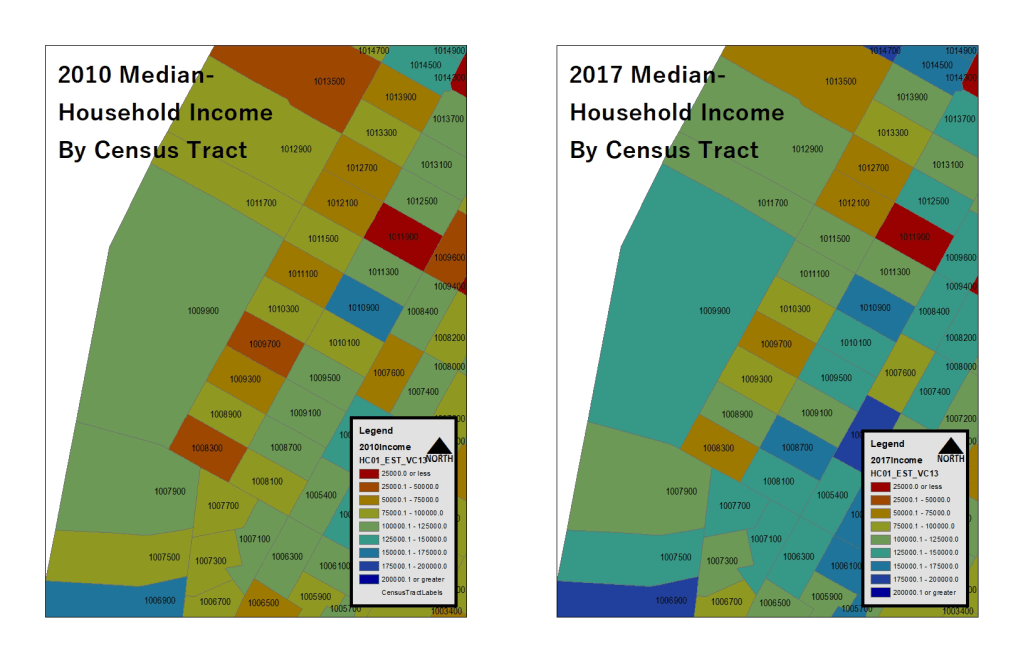
The increase in median household income can be used as an indicator to the financial accessibility to the neighborhood. While 37% of the residential units in buildings effected by Mandatory Inclusionary Housing offering are affordable homes, the life styles built for the residents of Hudson Yards can ultimately determine how much their neighborhood includes them. Nearby cafes such as Think Coffee, Maison Kayser, and Starbucks limit options for people looking for coffee that does’t start at $3. A large scale Equinox gym in 32 Hudson Yards is the closest in the area but initiation fees are between $200-$300 and monthly costs start at $160. The residents attracted to these lifestyle option give reasoning for the increase in median household income but continue to raise question over inclusivity in the neighborhood.
3. Geographical Accessibility To Hudson Yards
One of the most widely used features in Hudson Yards’ redevelopment is the 34 St -11 Av 7 line stop addition to the MTA. The route to the stop can be seen in yellow on the map below and the stop is the last west bound station on the 7 line. To illustrate the effect this station has had on the neighborhood the buildings within a 10 minute walk (800 meters) of the station have been filled orange.
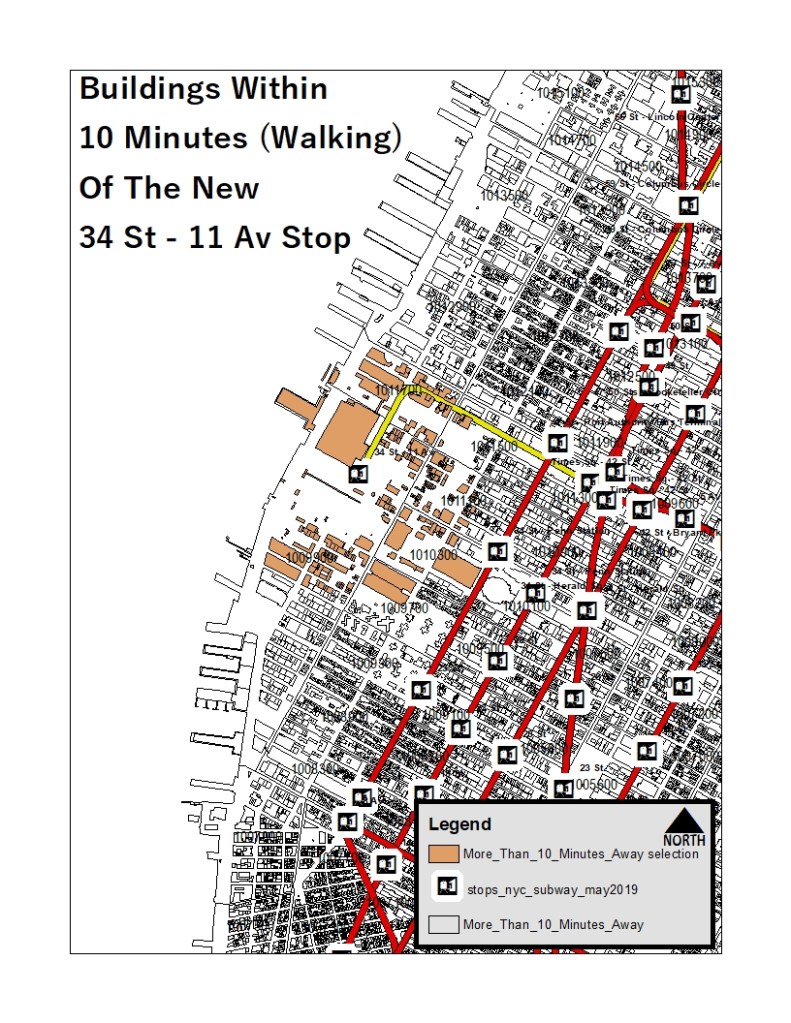
Whilst clearly increasing the geographic accessibility to the Far West Side, the MTA still comes at the cost of $2.75 a ride. The increase in office space and the expected amount of jobs created from the Special District warrant the need to expand the MTA. The 107 affordable homes within 15 Hudson Yards are within the 10 minute orange buffer around the new subway station. While offering an increase in inclusivity for those in affordable housing in transport aspects, Hudson Yards still fails to deliver a neighborhood that is completely accessible to all of its residents due to the fact that more reasonably priced options for food and lifestyle lie outside of this 10 minute walking buffer.
Citations:
Moss, Mitchell L. “How New York City Won The Olympics.” Wagner.edu.nyu, Nov. 2011, wagner.nyu.edu/files/rudincenter/Olympics_in_NYC%202012_REPORT_110711.pdf.
Mollot, Sabina. “Hudson Yards Named NYC’s First LEED Gold Neighborhood.” Real Estate Weekly, 9 Oct. 2019, rew-online.com/2019/10/hudson-yards-named-nycs-first-leed-gold-neighborhood/.
“Bella Abzug Park.” Bella Abzug Park News – NYC PARKS ANNOUNCES THE RENAMING OF HUDSON YARDS PARK IN HONOR OF ACTIVIST, CONGRESSWOMAN BELLA ABZUG : NYC Parks, Mar. 1AD, 2019, http://www.nycgovparks.org/parks/hudson-park/pressrelease/21644.
Rose, Joanna, and Jessica Scaperotti. “Hudson Yards Powers New Neighborhood with Hiring Initiative.” Hudson Yards New York, 13 Mar. 2019, http://www.hudsonyardsnewyork.com/press-media/press-releases/first-its-kind.
Plitt, Amy. “Hudson Yards’s First Affordable Housing Lottery Offers Apartments from $858/Month.” Curbed NY, Curbed NY, 12 Oct. 2018, ny.curbed.com/2018/10/12/17967338/hudson-yards-new-york-affordable-apartments-manhattan.
 Inclusivity In Hudson Yards